
How Acupuncture Can Help With Managing Stress & Anxiety
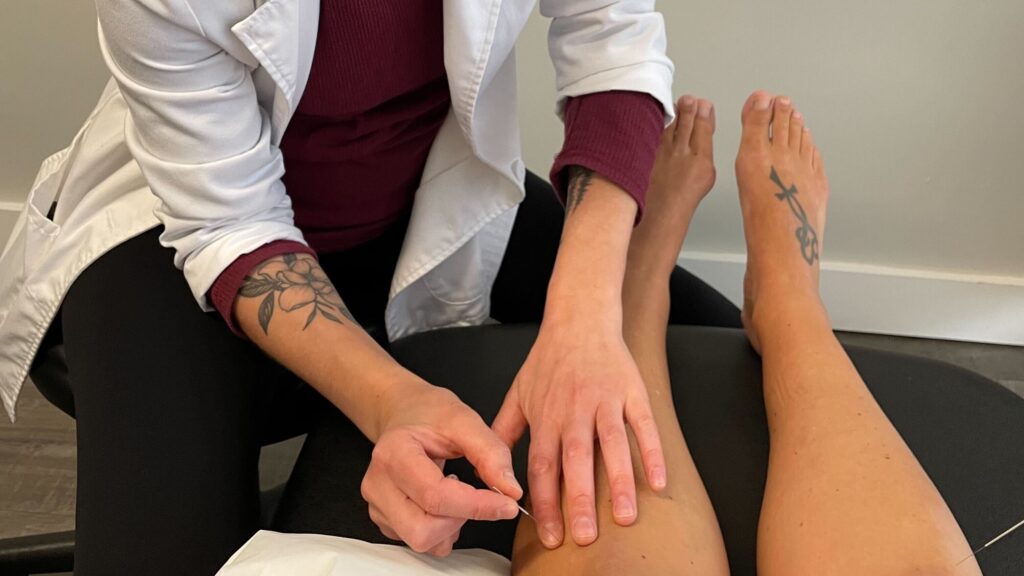
Kailyn James, R. Acu
Stress and anxiety are common emotional responses that we all experience at some point. This is how our body naturally responds to a challenging situation. However, when feelings of stress and anxiety are prolonged, this can have a serious impact to one’s mental, physical and emotional health. A 2021 survey run by Statistics Canada found that nearly one quarter of Canadians reported experiencing high levels of stress, meaning they found most days quite a bit or extremely stressful. This is significantly higher than in years prior (the pandemic certainly being a contributing factor), and is unlikely to change in the near future as we collectively face a healthcare shortage, the impacts of climate change and a very likely economic recession.
Stress is typically caused by an external trigger such as a work deadline, financial struggles or an illness in the family, whereas anxiety is excessive, persistent worry which manifests without a specific trigger. Both can lead to symptoms such as insomnia, mood dysregulation, digestive issues, headaches, difficulty concentrating and physical pain which can have a significant negative impact on a person’s quality of life. Left unchecked, these emotional responses can evolve into more significant issues such as an anxiety disorder, depression, drug or alcohol dependence, chronic pain and other mental/physical health concerns. However, there are lots of strategies that one can take to address stress and anxiety before it becomes unmanageable.
One of the most important tools in managing stress and anxiety is identifying and addressing it as soon as possible. While this may be difficult or painful, the faster we seek support means the faster we can start feeling better. Opening up to a trusted friend, therapist or healthcare provider can be the first step in acknowledging that there is a problem. For some people, they may not realize that they are experiencing severe stress, but rather, are having relationship or health issues that haven’t been an issue in the past. If you are someone who is suddenly struggling to fall asleep at night because of racing thoughts, is constantly bickering with a loved one for seemingly no reason, or experiencing a significant shift in appetite, libido or energy levels, perhaps consider whether stress may be affecting your daily life.
There are many steps one can begin to implement on their own to better manage stress and anxiety. For example, doing things like getting more sleep; cutting back on coffee, smoking and drinking; eating more nutrient-rich foods like fruit, vegetables and protein; drinking enough water, getting outside for at least twenty minutes of walking; regularly connecting with friends or family; and participating in activities that cultivate joy are all habits that support a healthy, balanced mind and body.
Traditional Chinese medicine (TCM) is a two-thousand-year-old system of diagnosing, treating and preventing disease which recognizes the inseparable relationship between the body, mind and spirit. Over the past twenty years, TCM has dramatically increased in popularity around the world, and for good reason – clinical research studies conducted by reputable healthcare organizations consistently show the efficacy of using TCM modalities such as acupuncture, cupping and herbal medicine in treating many chronic health conditions such as headaches, nausea (caused by surgical anaesthesia and cancer chemotherapy), endometriosis, addiction, back and joint pain, fibromyalgia and more.
The main theory behind TCM is that the body is comprised of channels (called meridians) through which qi (energy, or life force), flows. Qi moves blood through the body to supply the organs with vital nutrients. When qi and blood flow smoothly, the body can function optimally in a state of balance – the organs are able to properly take in and process nutrients, effectively interact with other organs within this physiological ecosystem, and eliminate waste. However, when qi and blood become stagnant – due to a deficiency of qi, or a blockage within the meridians – the body’s symbiotic balance is disrupted and it is here that disease and/or pain develop.
From a TCM perspective, chronic stress can create internal congestion and have a direct impact on our mental, physical and emotional wellbeing. Emotions and thought patterns are mental stimuli that affect our physical self. TCM sees a connection between emotions and specific organs, and when we suppress our emotions, or engage in recurring, self-destructive thoughts, this has a direct impact on how our organs – including our brain – are able to function. For example, someone who experiences a loss may be consumed with grief, and this may start by affecting the lung meridian (because the lung is the organ associated with grief and sadness). This may manifest as a cough, breathlessness or wheezing. Alternately, someone in an unhappy relationship who is experiencing anger, depression or frustration may develop pain or distension in the lower or lateral sides of the abdomen, because the liver is associated with the emotion anger. TCM works to collect and categorise physical, mental and emotional symptoms to identify and then treat the root cause of pain or disease – in the case of chronic stress, to move the stagnation and regulate the flow of qi and blood.
Anxiety is often (although not always) borne from deficiency in Chinese medicine. In TCM, there is a connection between the heart and the mind (known as the shen). When heart blood is sufficient, it can ground the mind and allow for clarify of thought and decisiveness. When blood is deficient – often seen in clinic when a person is overworking, undereating, sleeping poorly or generally burning the candle at both ends – the body isn’t able to produce enough blood to ground the mind, causing scattered and disorganized thinking, ruminating thoughts and heart palpitations. TCM works to strengthen the heart-mind connection, and also to nourish qi and blood.
Acupuncture is one of the primary TCM modalities used to treat disharmony in the body. Acupuncture is the insertion of thin, sterile needles at specific points (called acupoints) on the body along meridian lines to affect the flow of qi and blood. Relatively painless, acupuncture is actually found to be quite pleasant and relaxing for most people, and it can often incorporate breathwork and meditation to calm the nervous system, decrease stress and promote relaxation. In Nova Scotia, registered acupuncturists do not require a doctor’s referral and are able to direct bill to most insurance companies, making acupuncture an accessible and complementary treatment method in dealing with chronic pain or disease. A treatment plan can vary in length depending on how long the person has been unwell, but most patients see a significant improvement after 6-8 treatments. An acupuncturist is also able to provide gentle lifestyle counseling which may include stress management tips, TCM-informed nutrition recommendations and ideas to strengthen relationships, cultivate joy and incorporate movement into a patient’s daily routine.
Stress and anxiety can feel truly debilitating in the moment, but there are always small steps you can take to feel better again.. and you don’t have to do it alone. If you feel your stress or anxiety have become unmanageable and you feel you are at risk to yourself or others, please contact the Nova Scotia Mental Health Crisis line at 1-888-429-8167 immediately.
For more information on acupuncture for stress and anxiety, or to book a consult with Registered Acupuncturist Kailyn James, contact Choice Health Centre’s Bedford or Fall River locations at 902-404-3668 or book online.
References:
https://www.ncbi.nlm.nih.gov/pmc/articles/PMC7377446/
https://www.apa.org/topics/stress/anxiety-difference
https://www.camh.ca/en/driving-change/the-crisis-is-real/mental-health-statistics
https://www150.statcan.gc.ca/n1/daily-quotidien/210924/dq210924a-eng.htm
https://www.mayoclinic.org/tests-procedures/acupuncture/about/pac-20392763